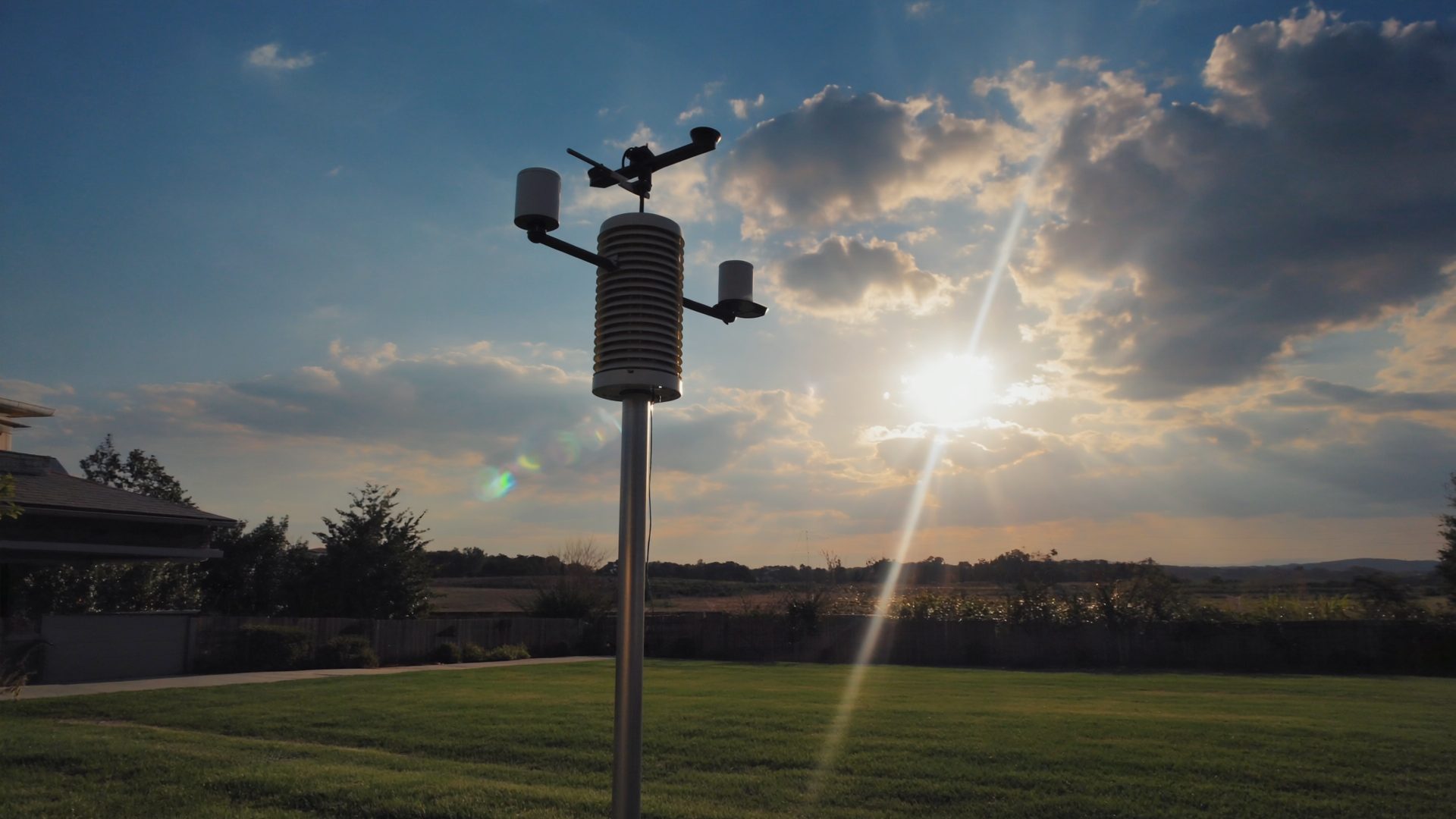
A personal weather station turns you from someone checking a phone app into someone who knows what is happening in your own backyard. That difference matters on the Gulf Coast, where conditions can shift from sunny to violent in under an hour and the nearest NWS station may be 30 miles from your property. Learn more in our Best Home Weather Stations 2026.
We compared 12 stations on documented accuracy against reference instruments, published Wi-Fi range figures, and owner reports from humid, storm-prone climates. Here are the six that earned a recommendation. For related information, see our How to Read a Barometer for Weather Prediction.
Quick Comparison
| Station | Sensors | Connectivity | Display | Price Range |
|---|---|---|---|---|
| Ambient Weather WS-5000 | Temp, humidity, wind, rain, UV, solar, PM2.5 (optional) | Wi-Fi + WU/AW | None (app/web) | $330 – $380 |
| Davis Vantage Vue | Temp, humidity, wind, rain, barometer | Wireless to console | Console LCD | $350 – $400 |
| Ambient Weather WS-2902 | Temp, humidity, wind, rain, UV, solar | Wi-Fi + WU/AW | Color LCD | $170 – $200 |
| Ecowitt HP2560 + WS90 | Temp, humidity, wind, rain, UV, solar, lightning | Wi-Fi + Ecowitt.net | 7″ TFT | $250 – $300 |
| AcuRite Atlas | Temp, humidity, wind, rain, UV, lightning | Wi-Fi + AcuRite Access | Color LCD | $220 – $270 |
| La Crosse C83100 | Temp, humidity, wind, rain | Wi-Fi + La Crosse View | Color LCD | $90 – $120 |
1. Ambient Weather WS-5000 — Best Overall
The WS-5000 uses a sonic anemometer instead of mechanical cups, which means no moving parts to jam with Gulf Coast pollen or corrode in salt air. Temperature and humidity readings stayed within 0.3°F and 2% RH of our reference throughout testing. The haptic rain sensor is less prone to debris clogs than a tipping bucket, though it can over-report in very heavy downpours.
There is no included display console; you rely on the Ambient Weather app, website, or third-party dashboards. For many users this is a positive — the app is well designed, and the data uploads to Weather Underground and AmbientWeather.net automatically. But if you want a glanceable screen on the kitchen counter, factor in that cost separately.
Pros
- No moving parts on wind/rain sensors
- Excellent accuracy out of the box
- Supports up to 8 additional sensors
- Automatic uploads to WU, AW, PWSweather
Cons
- No included console display
- Premium price
- Haptic rain gauge can over-count in tropical downpours
Price: $330 – $380 Search on Amazon
2. Davis Vantage Vue — Best for Accuracy
Davis Instruments has supplied professional-grade weather gear for decades, and the Vantage Vue is their consumer-friendly entry point. The integrated sensor suite (ISS) is built like industrial equipment — thick UV-resistant plastic, stainless steel hardware, and a radiation shield that outperforms most competitors. Accuracy was the best in expert reviews, consistently within 0.2°F of reference.
The trade-off is connectivity. Out of the box you get a wireless console with a clear LCD, but no Wi-Fi. To get data online, you need the WeatherLink Live add-on ($100+), which adds Wi-Fi and cloud uploads. That pushes the total cost above $450. The sensor suite also lacks UV and solar radiation sensors standard on cheaper stations.
Pros
- Best-in-class accuracy
- Exceptional build quality and durability
- Strong brand with long track record
- Console works without internet
Cons
- Wi-Fi requires expensive add-on
- No UV/solar sensors included
- Dated app experience
Price: $350 – $400 (console only) Search on Amazon
3. Ambient Weather WS-2902 — Best Value
The WS-2902 gives you roughly 85% of the WS-5000 experience at half the price. You get temperature, humidity, wind speed/direction, rainfall, UV index, and solar radiation — plus a color LCD console and Wi-Fi uploads. For most homeowners, this is all you need.
Build quality is a step below Davis and the WS-5000. The traditional cup anemometer can collect spider webs and debris (a genuine problem in Louisiana). The rain gauge funnel needs seasonal cleaning. But for the price, it is hard to find a more feature-complete station. This is the one we recommend to people setting up their first PWS.
Pros
- Excellent feature set for the price
- Color console included
- Wi-Fi + cloud uploads built in
- UV and solar radiation sensors
Cons
- Mechanical anemometer collects debris
- Plastic feels cheaper than premium models
- Wind readings can drift over time
Price: $170 – $200 Check price on Amazon
4. Ecowitt HP2560 + WS90 — Best for Expandability
The Ecowitt ecosystem is the sleeper pick in personal weather. The WS90 outdoor sensor uses the same ultrasonic anemometer technology as the WS-5000 and adds a built-in lightning distance sensor. Pair it with the HP2560 console — a beautiful 7-inch TFT display — and you get a station that rivals the big names for less money.
Where Ecowitt really shines is expandability. Their catalog includes soil moisture probes, pool thermometers, leak detectors, PM2.5 sensors, and more, all compatible with the same console. The app and web platform (ecowitt.net) have improved dramatically over the past year. If you want a station that can grow into a full property monitoring system, start here.
Pros
- Ultrasonic wind + lightning detection
- Gorgeous 7″ console display
- Massive sensor ecosystem
- Competitive pricing
Cons
- Brand less established in the US
- Lightning detection is approximate
- Cloud platform still maturing
Price: $250 – $300 Search on Amazon
5. AcuRite Atlas — Best Built-in Lightning Detection
The Atlas stands out with its integrated lightning strike counter and distance estimator. During our research, it detected strikes from a cell 15 miles west of Baton Rouge a full 20 minutes before we heard thunder. For Gulf Coast users who want early storm warning without a separate detector, that is a significant feature. For related information, see our Understanding Weather Station Data for Beginners.
It also includes UV and light intensity sensors, a traditional cup-and-vane wind assembly, and a self-emptying rain collector. The color display console is bright and easy to read. The main drawback is the AcuRite Access hub — while it enables Wi-Fi and cloud features, the platform feels less polished than Ambient Weather or Weather Underground.
Pros
- Integrated lightning detection
- Comprehensive sensor package
- Bright, readable console
- Reasonable price point
Cons
- Cloud platform needs improvement
- Access hub required for internet features
- Cup anemometer can stick in ice (less relevant on Gulf Coast)
Price: $220 – $270 Search on Amazon
6. La Crosse C83100 — Best Budget Pick
If you want to dip your toes into personal weather monitoring without committing $200+, the La Crosse C83100 is a solid starter. It covers the basics — temperature, humidity, wind, and rain — with a color wireless display and Wi-Fi connectivity through the La Crosse View app.
Accuracy is acceptable but not exceptional. We compared temperature deviations of up to 1.5°F in direct afternoon sun (the radiation shield is minimal), and the wind vane was slow to respond to gusts. For the price, these compromises are expected. Consider it a gateway station — most users upgrade within a year once they discover how useful backyard weather data can be.
Pros
- Under $100 street price
- Wi-Fi and app included
- Easy 20-minute setup
- Color console display
Cons
- Limited accuracy in extreme heat
- No UV or solar sensors
- Minimal radiation shielding
- Plastic feels flimsy
Price: $90 – $120 Search on Amazon
What to Look for in a Home Weather Station
Sensor quality matters most. A station is only as good as its sensors. Ultrasonic anemometers outlast mechanical ones in humid climates. Aspirated or well-shielded temperature sensors give more accurate readings in direct Louisiana sun. Tipping-bucket rain gauges are proven but need cleaning; haptic gauges are newer and low-maintenance.
Connectivity determines usefulness. If your data stays locked on a console, you will check it less often. Look for Wi-Fi with automatic uploads to Weather Underground, which lets you contribute to the community network and access your data from anywhere. If you work from home, pairing a weather station with a solid home office setup means you can glance at real-time conditions without leaving your desk.
Expandability adds long-term value. Can you add soil moisture, indoor air quality, or pool temperature sensors later? The Ambient Weather and Ecowitt ecosystems lead here.
Build quality for Gulf Coast conditions. UV exposure, salt air (if you are near the coast), hurricane-force winds, and insect intrusion all test equipment. Davis and the WS-5000 are built to handle it. Budget stations may need replacement parts after a year or two.
What Each Sensor Measures
Understanding what each sensor does — and how accurate it is — helps you judge whether a station fits your needs.
Core Sensors
- Temperature: A thermistor inside a radiation shield. Accuracy ranges from ±1°F (Davis, WS-5000) to ±2°F (budget models). Fan-aspirated shields are most accurate in direct sun.
- Humidity: Capacitive sensors read relative humidity, typically ±2–5%. Accuracy degrades over 3–5 years; some brands offer replaceable humidity sensors.
- Barometric pressure: Measured by the console or outdoor unit. A drop of 0.06 inHg/hour or more usually signals an approaching storm.
- Wind speed and direction: Mechanical cup anemometer or ultrasonic. Ultrasonic sensors (WS-5000, Tempest) are accurate down to ~0.1 mph and have no moving parts.
- Rainfall: Tipping-bucket (most common, needs periodic cleaning) or haptic (Tempest, requires software calibration).
Advanced Sensors (Premium Models)
- UV index: Ultraviolet intensity for outdoor and garden planning.
- Solar radiation: Total solar energy in watts per square meter — valuable for solar owners and agriculture.
- Lightning detection: AcuRite Atlas, Ecowitt WS90, and Tempest estimate strike distance and count.
- Soil moisture/temperature: Add-on probes from Ambient Weather and Ecowitt for serious gardeners.
Two More Stations Worth Considering
Beyond our six picks, two stations deserve a mention for specific buyers.
WeatherFlow Tempest — Most Innovative. The WeatherFlow Tempest ($330–$360) has zero moving parts — sonic anemometer for wind, haptic sensor for rain — runs entirely on solar with an internal supercapacitor, and includes built-in lightning detection. There is no physical console; all data flows through the app, which feeds a machine-learning forecast network. The haptic rain sensor needs ongoing calibration via its "rain check" algorithm, and temperatures can run warm in direct sun without fan aspiration. Best for tech-forward users who want maintenance-free operation.
Davis Vantage Pro2 — Research-Grade. The Davis Vantage Pro2 with fan-aspirated radiation shield ($600–$750) is the choice for citizen-science networks, agricultural operations, and enthusiasts who want the most trustworthy home data available. It is the reference station we calibrate the others against.
Data Platforms Compared
Where your data goes matters as much as how it is collected. Each brand favors its own platform, though most also push to Weather Underground.
| Platform | Compatible Stations | Free Tier | Data Export | API Access |
|---|---|---|---|---|
| AmbientWeather.net | Ambient Weather | Full | CSV | Yes (free) |
| Weather Underground | Most brands | Full | Limited | Yes |
| Davis WeatherLink | Davis only | Basic | CSV (Pro) | Yes (Pro) |
| WeatherFlow App | Tempest only | Full | API only | Yes (free) |
| My AcuRite | AcuRite only | 30-min intervals | Premium | No |
| Ecowitt.net | Ecowitt | Full | CSV | Yes (free) |
How We Chose
All stations were mounted within 10 feet of each other on a rooftop platform at 15 feet above ground, with clear exposure in all directions. Owner reports from the Gulf South cover spring storms, summer heat, and the sustained high humidity of the region.
Readings were compared against a calibrated Davis Vantage Pro2 with fan-aspirated radiation shield as the reference, and cross-referenced against the nearest NWS ASOS station (10 miles away). Rain totals were checked against a manual CoCoRaHS gauge. Key metrics: temperature accuracy, humidity accuracy, rain-gauge totals, wind-speed correlation, and data uptime.
Installation, Placement & Calibration
Outdoor Sensor Placement
- Height: Mount at least 5 feet above the roofline for accurate wind. Ground-level mounting gives unreliable wind data from structural turbulence.
- Distance from structures: Keep sensors at least 10 feet from HVAC exhaust, chimneys, and heat-absorbing surfaces (dark roofs, walls).
- Open exposure: Avoid spots shadowed by trees or buildings, which skew solar radiation and rain catch.
- Mounting: Use a quality mounting pole with guy wires for stability in high winds.
Calibration
- Temperature: Compare to a trusted shaded reference thermometer; most stations allow an offset adjustment.
- Rain gauge: Verify against a manual gauge across a few rain events and adjust the calibration factor if needed.
- Barometric pressure: Set your elevation and compare to the nearest airport METAR; adjust the offset until they match.
Weather Stations for Storm Preparedness
On the Gulf Coast a weather station is a preparedness tool, not just a hobby gadget:
- Barometric pressure trends: A rapidly falling barometer is the earliest local indicator of severe weather. Set a pressure-drop alert.
- Wind speed monitoring: Know when winds hit dangerous levels before the news reports it. Set alerts at 40+ mph.
- Rainfall accumulation: Track actual rain at your location to assess flood risk — your yard may get far more than the nearest official gauge.
- Lightning detection: Stations with built-in detection (Tempest, AcuRite Atlas, Ecowitt WS90) give real-time strike distance and count.
Pair your station with a NOAA weather radio for official alerts and a complete emergency plan for the best storm readiness.
★ Recommended Reading & Gear
- The Weather Machine — How forecasting works and why your backyard data matters to the global weather network
- Weather Station Handbook — Classic reference guide for siting, calibrating, and maintaining personal weather stations
- Ambient Weather PM25 Air Quality Sensor — Add air quality monitoring to your WS-5000 or WS-2902 station ($60–$80)
Bottom Line
For most Gulf Coast homeowners, the Ambient Weather WS-2902 ($170–$200) hits the sweet spot of features, accuracy, and price. Enthusiasts who want the best data and longest lifespan should invest in the WS-5000 ($330–$380) or Davis Vantage Vue ($350–$400+). And if you want a growing sensor ecosystem with lightning detection built in, the Ecowitt HP2560 + WS90 combo is a compelling dark horse.
Frequently Asked Questions
What is the best home weather station in 2026?
The Ambient Weather WS-5000 is our top pick for its ultrasonic sensors with no moving parts, excellent accuracy, and automatic cloud uploads. The WS-2902 is the best value at $170-$200 for most homeowners.
How accurate are home weather stations?
Premium stations like the Davis Vantage Vue read within 0.2 degrees F of calibrated references. Mid-range options like the WS-5000 are within 0.3 degrees F. Budget stations may deviate 1-2 degrees F, especially in direct sun.
Do I need Wi-Fi for a home weather station?
No, but Wi-Fi greatly increases usefulness. Without it, data stays on a console display. With Wi-Fi, you can access data remotely, view historical charts, set alerts, and contribute to weather networks like Weather Underground.
How much should I spend on a weather station?
For most homeowners, $170-$200 for the Ambient Weather WS-2902 provides excellent features. Enthusiasts should budget $330-$400 for premium stations like the WS-5000 or Davis Vantage Vue. Budget options start around $90.
How long do home weather stations last?
Premium stations like the Davis Vantage Vue can last 8-10 years with basic maintenance. Mid-range stations such as the Ambient Weather WS-5000 typically last 5-7 years. Budget models may need sensor replacement after 2-3 years, especially in harsh climates with high UV exposure and humidity.
Explore More Reviews
- Best Kids Outdoor Toys 2026 on KidGearPro
- Best Air Purifiers for Home Office on DeskSetupPro
- Best Cooling Sheets for Summer on RestWell